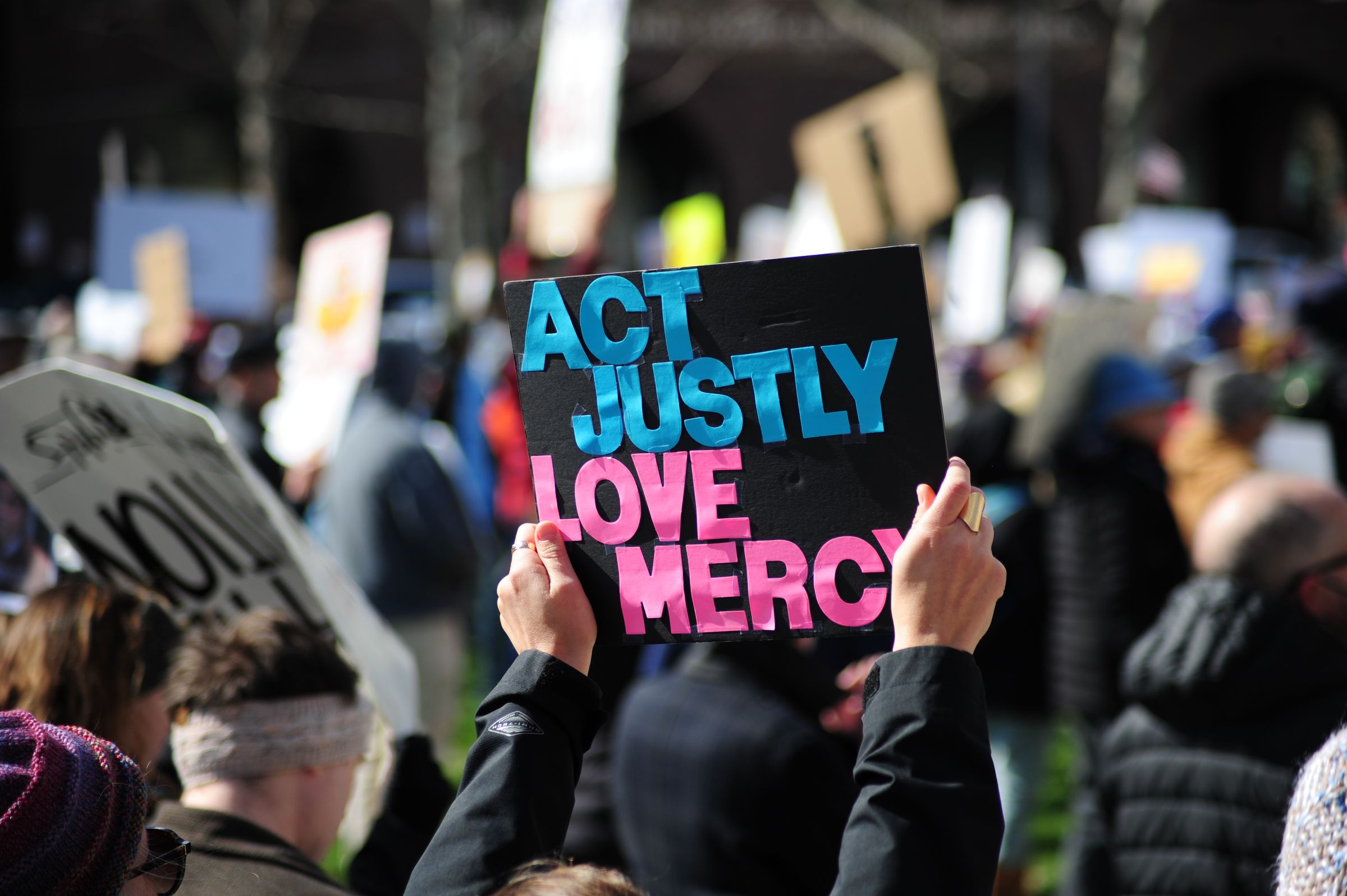
The recent disturbances have placed a difficult question before the country’s institutions: whether the state has honoured the commitments it made after earlier episodes of social crisis. For sociologist Sheila Bunwaree, founder of the Institute of Social Development and Peace (ISDP), the answer is largely negative. Successive governments, she argues, have failed to act on the recommendations of multiple official reports on social cohesion, and the growing inequality and poverty that fed last week’s violence are the result.
Speaking around the International Day for the Eradication of Poverty, marked each year on 17 October, Bunwaree draws a direct line between the unrest and structural deprivation. Nothing justifies violence, she insists. But peace, she reminds the public, can only be secured where there is justice. She invokes Nelson Mandela’s 2005 address in London for the Make Poverty History campaign, in which Mandela described poverty as man-made and therefore capable of being overcome by human action. Her concern is how many people, particularly among political decision-makers, truly believe those words and are prepared to act on them.
The accountability question is one she has raised before. In 2008, as ISDP founder, she and her colleagues organised a major colloquium, “Poverty in Mauritius: An Agenda for Reflection and Action,” alongside the SADC summit on poverty. Nearly two decades later, she judges that political leaders have not taken the bull by the horns. Measures have been introduced here and there, but she sees a tacit refusal to change a development paradigm she describes as founded on exploitation and oppression, one that leaves little room for effective intervention towards a more just, equitable and inclusive society. In her view, past and present leaders alike have lacked both the competence and the will to tackle the roots of the problem holistically.
Her prescription is a systemic approach. Poverty, she argues, is complex, dynamic and multi-faceted, and in a pluriethnic society carrying the painful legacy of slavery and indentured labour, understanding it demands an interdisciplinary and intersectional lens: economics, history, sociology, psychology and social work must be combined, with class, ethnicity, socio-economic group, gender and age treated as key variables. She cites pension reforms steered largely by actuaries and neoliberal-oriented economists as an example of what happens when that breadth is absent: confusion, widespread discontent and deepening poverty in some families. An intersectional approach, drawing on theory first advanced by Professor Kimberley Crenshaw, shows that lived experience differs according to how these variables intersect.
Meanwhile, the context makes the task harder. Climate change, food and water crises, oil shocks stemming from wars and conflicts, debt, the rising cost of living and geopolitical shifts all make poverty eradication more difficult, and those at the bottom of the ladder suffer most. The concentration of wealth in the hands of a small number of people, combined with neoliberal policy and a rentier economy, only sharpens inequality. The recent unrest, she says, is the product of an amalgam of problems that accumulated frustration until the vase overflowed, weakening social cohesion.
Among those problems she lists the situation of a segment of society disproportionately represented by the Creole community, with little prospect of social mobility and basic rights unmet: access to clean water, adequate food, health care, quality education, housing and decent work. She also points to corruption, drugs, nepotism, prejudice and discrimination as forces that corrode society. Rejecting what she calls a reductionist reading of events, she concedes that drug traffickers and barons, who organised to provoke violence, may be among the factors. But she argues that blaming drug barons while victimising young people already crushed by poverty and an exclusionary education system reflects incompetence in the management of the country’s affairs and a lack of humanism.
Here her critique turns directly to those in power. Invoking social justice morning, noon and night while policies create more misery, she says, reflects the hypocrisy of the system. If the Prime Minister wants credibility, his team, the institutions concerned and he himself must demonstrate who these drug barons are. She notes pointedly that some demanded proof from the former Deputy Prime Minister when he denounced corruption; it may be time, she suggests, that those same people demand proof from the Prime Minister regarding the drug barons.
The pattern of unimplemented recommendations is, for her, long established. After the February 1999 riots, the Matadeen commission made recommendations concerning the police force and the marginalisation felt by the Creole community; little was done beyond, as she recalls, the creation of the Independent Police Complaints Commission. The Truth and Justice Commission and the MRC Social Fabric Study, which she led with a team from the Tata Institute of Social Sciences in Mumbai, produced pertinent recommendations that could have consolidated social cohesion, yet the great majority were shelved. Her own research, including a paper titled “A quest for peace and stability” published in these columns, has met the same fate, in a society where social dialogue has disappeared and participatory democracy struggles to take root.
A full account of her reflections, including her appeal for resistance to a development model she sees as stripped of humanism, can be read at https://www.lemauricien.com/le-mauricien/sheila-bunwaree-sans-justice-sociale-la-paix-reste-tres-fragile/721293/. She defines herself as a scholar-activist, citing Noam Chomsky and Edward Said on the intellectual’s duty to denounce injustice, and remains convinced that a more just, equitable and inclusive society would make Mauritius one of the rare corners of the world where it is truly good to live. Whether the country’s institutions will act on that warning, where so many commissions and reports before it have gone unheeded, remains the open question her intervention poses.