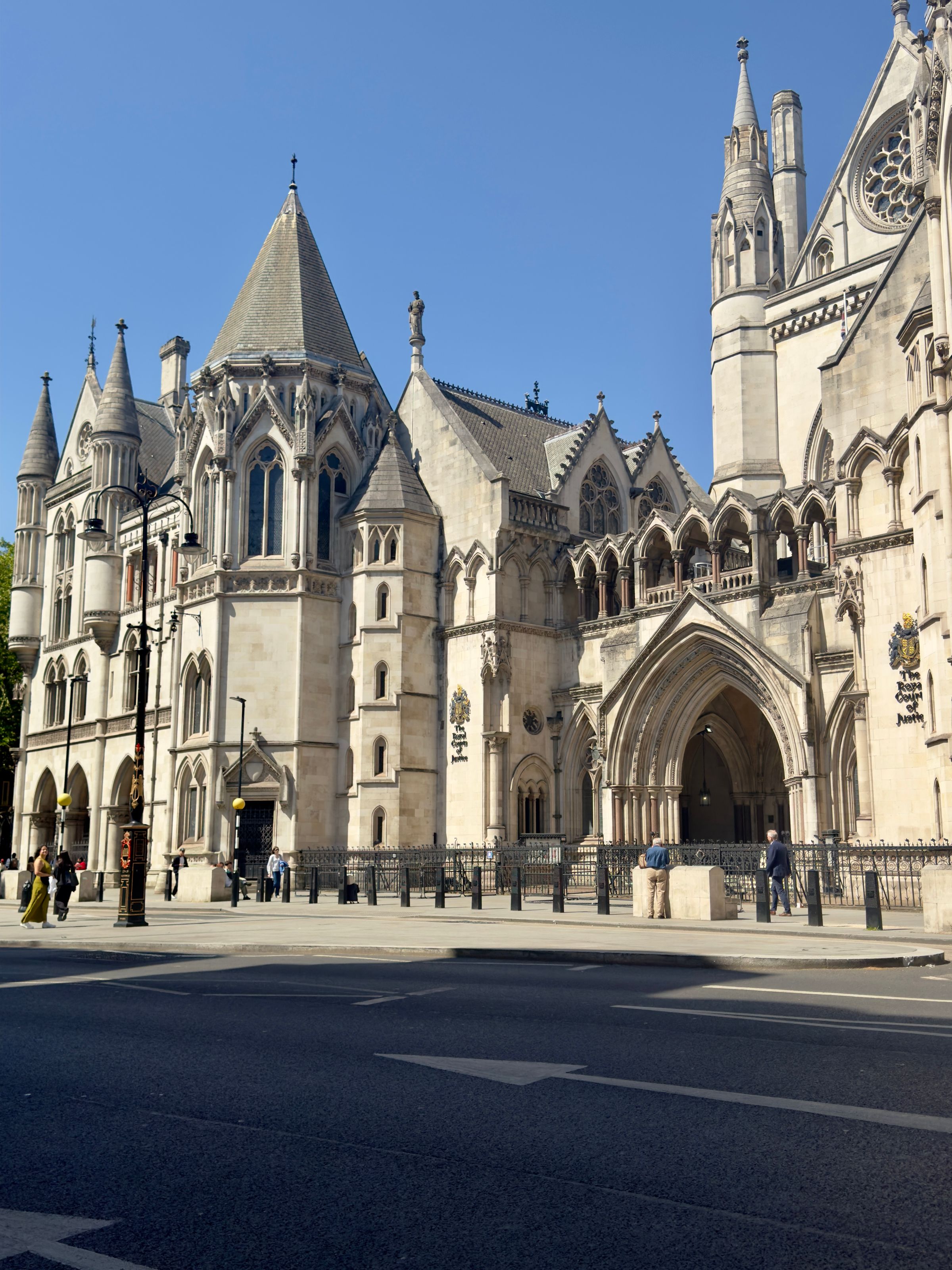
Court of Appeal: interest on costs still runs under CFA funding
Funded claimants can still recover interest on costs, appeal court rules
The Court of Appeal has settled a practical question about how litigation costs are actually paid and recovered: whether interest runs on a claimant’s costs when those costs were never funded out of pocket. In Municipio de Mariana v BHP Group Ltd and others [2026] EWHC 73 (TCC), a long running case, the court held that pre-judgment interest is payable on costs even where the claimants are funded by a conditional fee agreement, a CFA, under which fees only fall due on a successful outcome.
The ruling came on appeal by the defendants against an award of pre-judgment interest at 1% above UK base rate on the claimants’ costs, running from 1 August 2023 until 26 January 2026. The underlying proceedings arise from the collapse of the Fundao Dam in Brazil, with a large number of claimants seeking losses alleged to have been suffered as a result of the collapse. The court had previously given judgment following a 5 month trial. The costs question is the latest stage in that litigation.
The defendants’ argument was straightforward on its face. Because the claimants’ legal costs had been funded by a CFA, the costs only became due on the occurrence of a successful outcome. The claimants had therefore not actually spent, or borrowed, the money to pay their legal costs as the proceedings went along. On that view, they were not out of pocket and should not receive interest on costs prior to the successful outcome.
The Court of Appeal dismissed the appeal. It observed that the discretion to award interest is a broad one, stating: “There is […] nothing in the wording of CPR Part 44.2(6)(g) or elsewhere to suggest that […] interest can only be awarded if the receiving party has actually expended money on costs or has borrowed money to pay such costs.” The lower court had been right to exercise its discretion to award pre-judgment interest in the claimants’ favour.
Central to the court’s reasoning was the claimants’ position under the CFA. They were out of pocket in the sense that they would have to pay a success fee to compensate their solicitors for not being paid unless and until the claim was successful. As the court put it: “The purpose of the power in CPR Part 44.2(6)(g)”, is “to compensate the recipient either for having been kept out of his money or for itself being liable to compensate someone else (whether the solicitors providing the legal services themselves, an insurer or a third-party funder) for the fact that legal services have been provided to the recipient on credit.” A liability to pay a success fee under a CFA, the court held, is precisely a liability to compensate solicitors for contingent and delayed payment, and it falls within the purpose of the power to award interest on costs.
Meanwhile, the appellants also pointed to Hirachand [2024] AC 599 and to section 58A(6) of the Legal Aid, Sentencing and Punishment of Offenders Act 2012 (LASPO), which ban recovery as between parties of success fees. The court rejected that objection. Awarding interest on costs, it held, “does not infringe the prohibition in section 58A(6), because it is an order for pre-judgment interest on costs, which is quite distinct and separate from an order requiring ‘the payment by one party of all or part of a success fee payable’.” An award of pre-judgment interest is not equivalent to an order requiring payment of the success fee itself. The court further reaffirmed that pre-judgment interest on costs is not exceptional, restating the approach taken in previous authorities.
For those managing the practical delivery of litigation, the judgment is useful clarification even if perhaps unsurprising. The arithmetic matters. The current Bank of England base rate is 3.75%, so interest at 1% above that, or 4.75%, over say 3 years pre-judgment can amount to a not insignificant sum. On an award of say £500k, the interest component might amount to as much as over £70,000. The practical message is one of execution: those acting for claimants on CFAs should not forget to recover this interest, and defendants or their insurers should reserve for it as one of the costs risks of defending a claim. Full analysis of the decision is available from Burges Salmon at https://www.burges-salmon.com/articles/102o5zy/court-of-appeal-holds-interest-is-payable-on-costs-even-where-a-claimant-is-funde
Q&A
Does interest on costs run where a claimant's legal costs were funded by a conditional fee agreement?
Yes. In Municipio de Mariana v BHP Group Ltd and others [2026] EWHC 73 (TCC), the Court of Appeal held that pre-judgment interest is payable on costs even where claimants are funded by a CFA and never paid or borrowed the money themselves.
What did the Court of Appeal decide on the defendants' appeal?
It dismissed the appeal, upholding pre-judgment interest at 1% above UK base rate on the claimants' costs from 1 August 2023 until 26 January 2026.
What argument did the defendants raise about success fees?
It relied on Hirachand [2024] AC 599 and section 58A(6) of LASPO 2012, which ban recovery as between parties of success fees, but the court held that an interest award is distinct from an order requiring payment of a success fee.
What is the practical financial impact of the ruling?
At the current 3.75% Bank of England base rate, 4.75% over three years on a £500k award could amount to over £70,000, so claimant teams should recover it and defendants or their insurers should reserve for it.